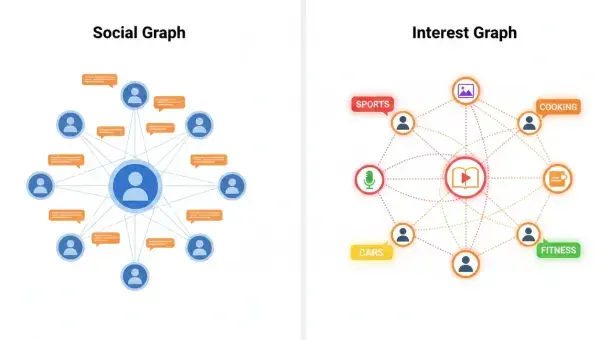
Why Social Media Isn't Optional Anymore: The Hidden Engine Behind AI Discovery
Your website traffic might be down. Your social media might feel like shouting into the wind.
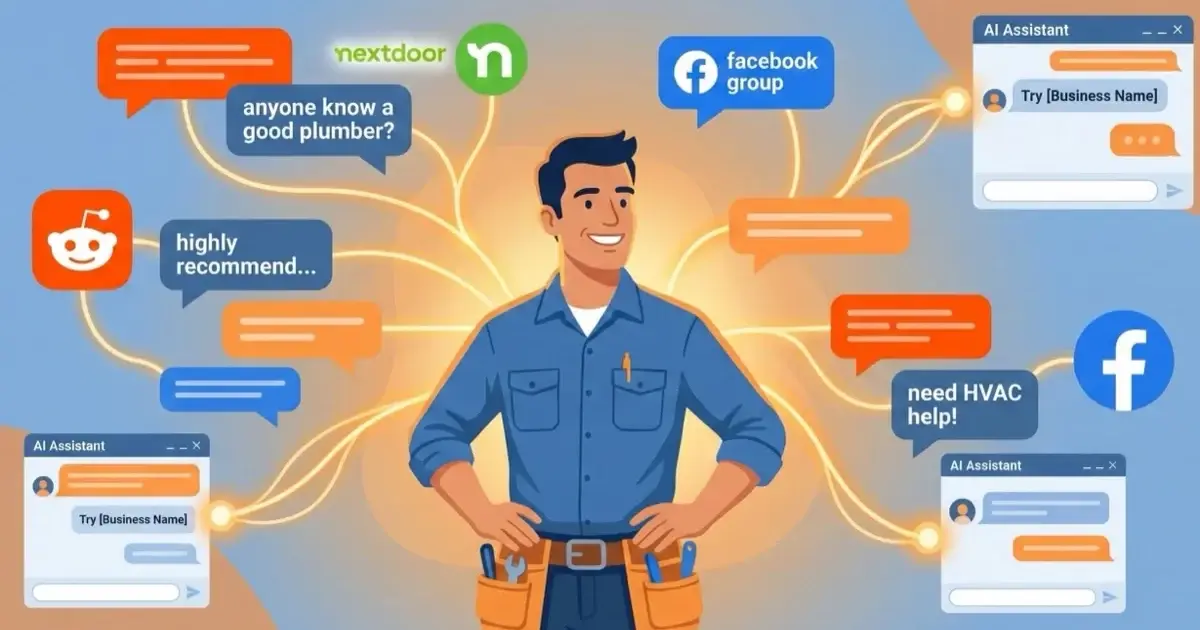
Your website traffic might be down. Your social media might feel like shouting into the wind. But here's the uncomfortable truth: the businesses that ignore social media in 2026 will become invisible to your most powerful referral channel.
If you've been running a local service business for any length of time, you've probably had this thought: "Do I really need to be on social media? My customers find me through referrals and Google."
Here's the thing: that statement used to be true. But something fundamental has shifted in how people discover and choose service providers.
Let me explain what's actually happening and why social media has become an essential part of your marketing strategy, even if you never get a single customer directly from a Facebook post.
The Discovery Game Has Changed
When someone needs a plumber, an electrician, or a landscaper today, they don't just Google it and click the first result anymore. They might:
- Ask ChatGPT for recommendations
- Search "best [service] near me Reddit"
- Check Nextdoor for neighbor recommendations
- Ask in a local Facebook group
- Discuss their experiences on Reddit
- Look at Google's AI Overview summary
Here's what all these have in common: they're pulling from real human conversations to generate answers.
A recent study found that nearly two-thirds of consumers have started using AI platforms specifically for product and service recommendations. And Reddit, a platform most service businesses completely ignore, is now the most cited source across all major AI models when generating answers.
That means when someone asks ChatGPT, Claude or sees a Google AI overview answer for "who's a good HVAC contractor in [your city]," the AI is looking at what real people are saying about contractors online. If you're not part of those conversations, AI tools CAN'T recommend you.
The "Dark Funnel" Problem
Here's something that will either frustrate you or liberate you: you'll never be able to track where most of your customers actually come from.
Marketing experts call this the "dark funnel." Someone hears about you in a Facebook group, then Googles your business name, clicks your website, and fills out a form. Where did that lead come from? According to your analytics: Google. In reality: the customer got information from 23 places (on avg.) including social media.
Or consider this: a potential customer asks in a neighborhood Facebook group, "Anyone know a good roofer?" Three people recommend you. That person never visits your social media, never clicks a link you posted. They just call you directly. That lead came from social media, but you'll never know it.
This is why so many business owners think social media "doesn't work" for them. They're measuring the unmeasurable.
The question isn't "How many leads did I get from my last Facebook post?" The question is "Am I part of the conversations where people are talking about services like mine?"
Why Social Listening Is Your Secret Weapon
Before you post another photo of your team or share another "Happy Friday!" update, let me introduce you to something far more valuable: social listening.
Social listening is exactly what it sounds like: paying attention to what people are saying online about your industry, your services, and the problems you solve. And it's the foundation of any effective social media strategy.
Here's what most business owners get wrong: they think of social media as a megaphone, a place to broadcast their message. But the businesses that actually grow from social media treat it as a listening device first.
Think about walking into a networking event. You wouldn't stand in the doorway and start shouting about your services. You'd walk around, join conversations, listen to what people are talking about, and then add something helpful when you have genuine value to contribute.
Social media works the same way.
The "Lurk and Learn" Strategy
Before you engage anywhere, you need to understand where your potential customers are actually having conversations and what they're talking about. Here's how to do it:
Step 1: Find Your Communities
For local service businesses, these typically include:
- Nextdoor – This is literally where your neighbors discuss who they hire for home services.
- Local Facebook Groups – Search for "[Your City] recommendations," "[Your City] homeowners," or "[Your City] community."
- Reddit – Search for your city's subreddit (r/[yourcity]) and related subreddits (r/homeimprovement, r/landscaping, r/plumbing, etc.)
- Google Business Profile Q&A – Yes, this counts. People ask questions here.
Step 2: Join and Watch (Don't Sell)
Join these communities and spend two weeks just reading. Pay attention to:
- What questions do people ask about your type of service?
- What frustrations do they express about past providers?
- What do they wish they knew before hiring someone?
- When they recommend a business, what reasons do they give?
This intelligence is marketing gold. It tells you exactly what your potential customers care about.
Step 3: Document the Patterns
You'll start seeing the same questions and concerns come up repeatedly. Write these down. They become:
- FAQ content for your website
- Topics for helpful social posts
- Talking points for your sales conversations
- Subject lines for your email marketing
From Listening to Engaging (The Right Way)
Once you understand what your community is talking about, you can start participating, but there's a right way and a wrong way to do this.
Wrong Way: "Hi, I'm [Name] from [Business], we offer [services] and would love to help! Call us at..."
Right Way: Actually answering questions with genuine expertise, no pitch attached.
Here's a real example of what works: Someone asks in a local Facebook group, "My AC unit is making a weird clicking noise. Is this something I need to worry about?"
Promotional Response (Don't Do This): "That could be serious! You should have it looked at right away. We offer 24/7 service and can come out today. Call us at..."
Helpful Response (Do This): "A clicking noise usually means one of three things: 1) Debris in the outdoor unit, you can check this yourself by looking through the grate, 2) A relay switch starting to go, not urgent but worth monitoring, or 3) Compressor issues if it's accompanied by the AC not cooling well. If it's just clicking but cooling normally, it's probably #1 or #2. If cooling is affected, I'd get it checked soon before summer hits."
Notice what the second response does: It provides genuine value. It demonstrates expertise. It builds trust. And it doesn't ask for anything.
When you consistently show up as the helpful expert, not the pushy salesperson, something interesting happens. People start recommending you in those same groups, without you asking. "The HVAC person who's always helpful in here is [Your Business]. I'd call them."
The AI Connection: Why This Matters for Being Discovered
Here's where this connects to something bigger.
AI platforms like ChatGPT, Claude, and Google's AI Overview don't just pull from websites. They increasingly pull from social conversations, forums, and community discussions to understand who's trusted and recommended for specific services. (A recent study showed that up to 53% of ChatGPT's citations came from Reddit).
When you're consistently helpful in online communities, you're creating a trail of positive associations with your business name. You're appearing in conversations where people recommend service providers. You're demonstrating expertise in a way that AI can recognize and surface.
This is Answer Engine Optimization (AEO) in action. Except instead of optimizing a webpage, you're building genuine authority through social engagement. This is what marketers call an "earned channel".
A marketing expert I follow put it perfectly: "Think about social platforms the same way you think about AI: it's zero-click. They don't send traffic directly. But would you stop investing in social? You wouldn't."
The same logic applies to your local service business. The direct ROI might be hard to measure, but the businesses that show up consistently in these conversations will be the ones AI platforms learn to recommend.
What Content Actually Works for Service Businesses
Once you've listened and started engaging helpfully, you'll want to create some content for your own profiles. Here's what actually works:
Educational Content Based on Real Questions
Remember those questions you documented during your listening phase? Turn them into content:
- "3 things to check before calling an electrician about flickering lights"
- "What that weird smell from your AC actually means"
- "When to repair vs. replace your water heater (honest answer)"
Notice the format: helpful, specific, and not salesy.
Behind-the-Scenes Expertise
Show your work without being promotional:
- A photo of an interesting job (with permission) with a brief explanation of what you found and fixed
- A tip you'd give a homeowner based on something you saw that day
- Seasonal preparation advice ("Here's what I'm checking on my own home before winter")
Local and Timely Content
This performs especially well on platforms like Nextdoor:
- "After this week's storms, here's what [your city] homeowners should check"
- "With spring coming, here's my priority list for [service type]"
- Commentary on local events or conditions that relate to your expertise
User-Generated Trust Signals
When customers share positive experiences (reviews, testimonials, project photos), reshare these. This isn't you bragging. It's social proof from real people.
A Practical Social Media Framework for Service Businesses
Here's a realistic weekly approach that takes about 2-3 hours total:
Daily (10 minutes):
- Check Nextdoor and your local Facebook groups for questions you can answer helpfully
- Respond to any comments or messages on your business profiles
Weekly (1 hour):
- Create one educational post based on a real question you've seen or answered
- Share one behind-the-scenes moment from your work week
- Engage with other local businesses' content (builds community and visibility)
Monthly (1 hour):
- Review what questions came up most frequently, update your FAQ or create a blog post
- Check if there are new local groups you should join
- Ask a happy customer if they'd be willing to share their experience in a review or post
This isn't about posting constantly. It's about showing up consistently and adding value when you do.
The Platforms That Matter (And Those That Don't)
Not all social platforms are equal for local service businesses. Here's where to focus your energy:
High Priority:
- Reddit – This is the biggy. It gets cited by all the AI tools. It's anonymous, so be prepared for people to give candid (sometimes ruthless) but highly actionable feedback.
- Nextdoor – The highest-intent platform for local services. People here are actively looking for recommendations.
- Google Business Profile – Your Q&A section and posts appear directly in search results.
- Facebook Groups – Not your business page, the community groups where neighbors talk.
- LinkedIn – Only for B2B, but if you serve B2B customers, LinkedIn THE place.
Medium Priority:
- Your Facebook Business Page – Useful for sharing customer reviews and occasional updates.
Lower Priority (for most service businesses):
- Instagram – Unless your work is highly visual (landscaping, remodeling).
- TikTok – Unless you want to create how-to video content.
- Twitter/X – Rarely where local service decisions happen.
The goal isn't to be everywhere. It's to be consistently present where your potential customers actually talk about hiring people like you.
What This Looks Like in Practice
Let me paint a picture of how this works for a real business:
Before: A local HVAC company posts random content to their Facebook page. "Happy Thanksgiving from our team!" gets 3 likes. They try boosting posts occasionally, get some clicks, no calls. They conclude "social media doesn't work for us." (Btw, thanks to the algorithms, most users will see your "Happy Thanksgiving" message 3 weeks later - unless you post every day).
After: They join their city's Nextdoor, the local homeowners Facebook group, and monitor their city's subreddit. They spend 15 minutes daily looking for HVAC questions. When someone asks about a noisy furnace, they give a genuinely helpful answer. No pitch.
Over three months, they've answered maybe 40 questions this way. People start recognizing their name. When someone new asks "anyone know a good HVAC company?", three people who've seen their helpful answers recommend them unprompted.
Meanwhile, when ChatGPT pulls together its answer to "best HVAC company in [city]," it's finding conversations where this business name appears alongside words like "helpful," "knowledgeable," and "recommended."
None of this shows up in their analytics as "social media leads." But their phone rings more, and when they ask how people heard about them, the answer is increasingly "someone mentioned you online."
The Bottom Line
Social media for service businesses isn't about going viral or building a huge following. It's about being present in the conversations where people discuss and recommend service providers.
This means:
- Listen first. Understand where your community talks and what they talk about.
- Add value, not pitches. When you engage, be genuinely helpful.
- Be consistent, not constant. Show up regularly, even if briefly.
- Think long-term. You're building trust and authority, not generating instant leads.
The businesses that do this will be discovered by both people and AI. The businesses that don't will wonder why their competitors keep getting mentioned while they stay invisible.
The conversation about who to hire is happening right now in a Facebook group, on Nextdoor, or in a Reddit thread. The only question is whether you're part of it.
Ready to Build Your Social Presence the Right Way?
Social media is just one piece of a complete content marketing strategy. At GTM37, we help service businesses build the kind of online presence that gets discovered by both customers and AI platforms.
Get a Free Digital Presence Audit – We'll show you exactly where your business stands in local online conversations and what opportunities you're missing.
Subscribe to the Booked Solid newsletter for weekly marketing insights designed for service businesses.